
MI–0008 Recorded September 6, 2026
Responsibility manages risk without eliminating freedom
Responsibility means managing risk, not eliminating freedom.
Refined insight
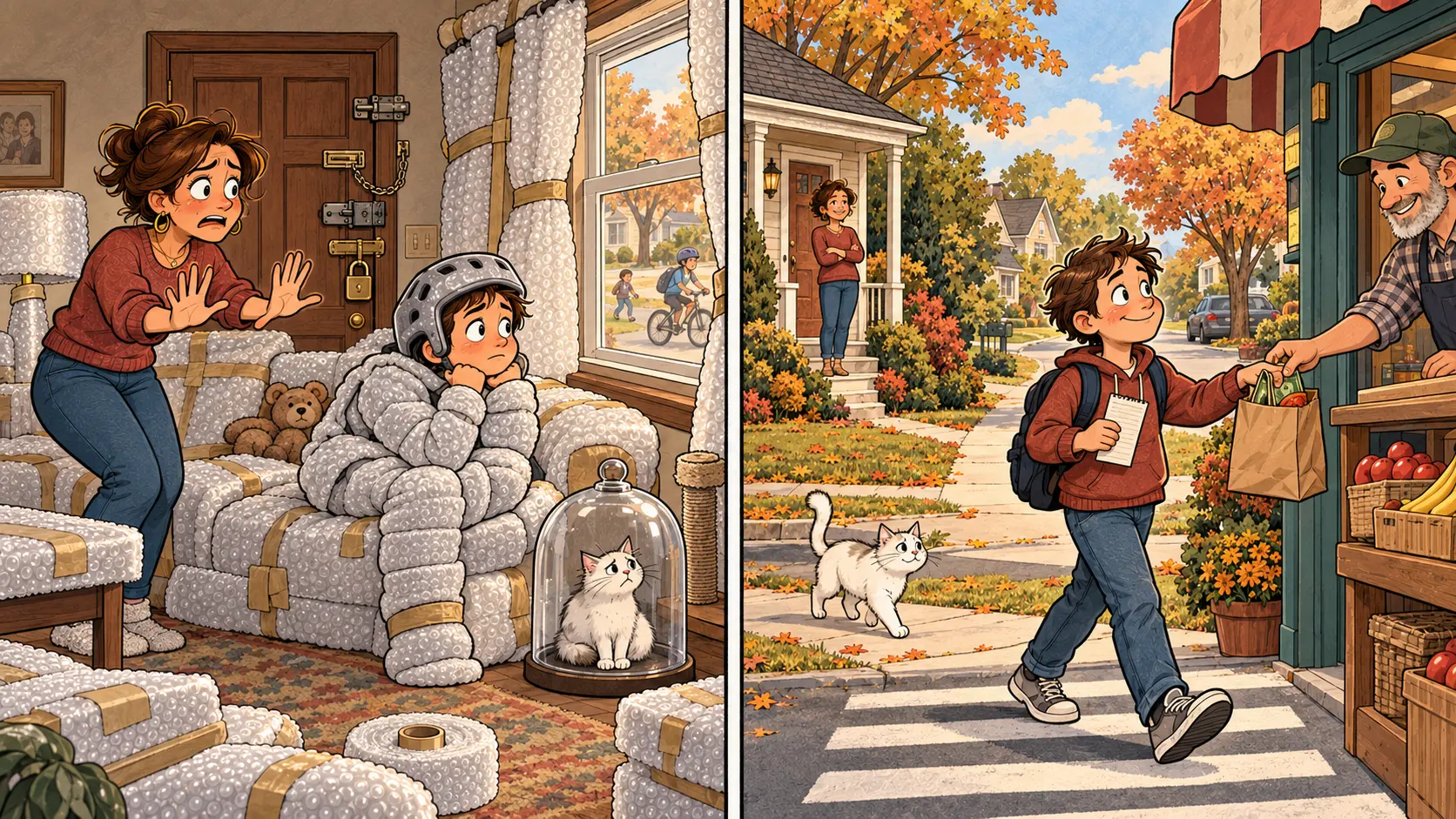
The safest life is not necessarily the best life. Responsible care means understanding risk, taking sensible precautions, and preserving an appropriate degree of freedom.
Safety is not the whole of a good life
Safety and freedom inevitably pull in different directions. It is tempting to call the safest possible option the most responsible one, but eliminating every risk can also eliminate autonomy, experience, natural behavior, and much of what makes life fulfilling.
Genuine responsibility does not require making life risk-free. It requires recognizing the risks, reducing the avoidable ones, and deciding which remaining risks are justified by the freedom they preserve.
Gamma and the difference between care and control
This insight began with Gamma, a neutered outdoor cat who hunts, explores, largely looks after himself, and is exceptionally contented and well-behaved in the house.
Spaying or neutering prevents irresponsible reproduction. Vaccination, parasite prevention, identification, and judgment about the surroundings manage foreseeable dangers. Outdoor access still carries risk, but it also permits exploration, hunting, exercise, choice, and natural feline behavior.
Reducing Gamma’s risks is responsible care. Assuming that responsibility requires removing all freedom confuses care with control.
The same contradiction appears everywhere
The teenage driver
Young drivers have a disproportionately high accident rate. Prohibiting them from driving would reduce accidents, but it would also deny mobility, independence, and the experience needed to become safer drivers. Lessons, supervised practice, licensing, and graduated restrictions manage the risk because the freedom has value.
Learning to swim
A parent can prevent swimming accidents by never allowing a child near water. The contradiction is that the child never learns to swim and may be less safe when water is eventually unavoidable. Responsible protection includes carefully managed exposure to the risk.
Learning to walk
The only reliable way to prevent a toddler from falling while learning to walk is to prevent the toddler from walking. That eliminates the immediate danger by also eliminating development. A few safe falls help build the competence that eventually reduces the risk.
Walking to the store
A child who is gradually trusted to walk a mile to a store, buy something, solve small problems, and return home learns how to navigate the world. The experience develops practical judgment, independence of thought, and confidence. Preventing every unsupervised outing may reduce short-term risk while creating dependence and uncertainty.
The employee who might make a mistake
A manager can prevent independent mistakes by requiring approval for every decision. The result is an overwhelmed manager and employees who never develop judgment. Responsible leadership sets boundaries, limits the cost of failure, and gives people enough freedom to become capable.
The older adult living independently
Removing a person’s car, stairs, cooking, financial control, and freedom to go out may reduce several measurable risks. Taken far enough, protection becomes imprisonment. Responsible care must consider autonomy, dignity, and quality of life alongside physical safety.
The measure that eliminates the immediate risk may also eliminate independence, competence, development, dignity, or the experience that makes life worthwhile.
Responsibility still requires judgment
This is not an argument that every freedom is appropriate in every circumstance. The responsible balance depends on the individual, the environment, the magnitude of the risk, and the possible effects on others.
A child crossing a quiet neighborhood street is not equivalent to a child crossing a six-lane highway. A cat beside heavy city traffic is not living with the same balance of risk as a cat in a suitable suburban or rural environment. Responsibility requires distinctions, not blanket rules.
The practical magic
Ask yourself: Am I responsibly managing a meaningful risk, or eliminating freedom simply because something could go wrong?
Then ask: What precautions would make this freedom reasonable without destroying the freedom itself?
Tim Barrie, with conversational refinement
Where this insight comes from
The insight grew from Tim’s observations of Gamma and his distinction between responsible population control and allowing an animal to live naturally. Tim compared outdoor freedom with teaching a teenager to drive despite the elevated accident risk among young drivers.
No external source has been established for this exact wording. The idea overlaps with established principles of proportionality, autonomy, acceptable risk, harm reduction, and the distinction between responsible protection and overprotection.